What the “Freedom to Drive Initiative” Means for American Streets
On April 20th, 2026, Secretary of Transportation Sean Duffy sent a letter to all Governors across the U.S., announcing the “Freedom to Drive Initiative” from the Department of Transportation (DoT). In essence, this initiative pushes governors to join the fight against automobile “congestion and gridlock” to reclaim lost economic output from traffic and less facilities for automobiles.
The initiative asks Governors to identify bottlenecks in their state that generate gridlock and lose industry money (State Street, anyone?), and also to identify actions for recourse, specifically stating: “Focus solutions on expanding and maximizing roadway capacity for driving… You may also need to recover roadway capacity from other purposes to support driving.”
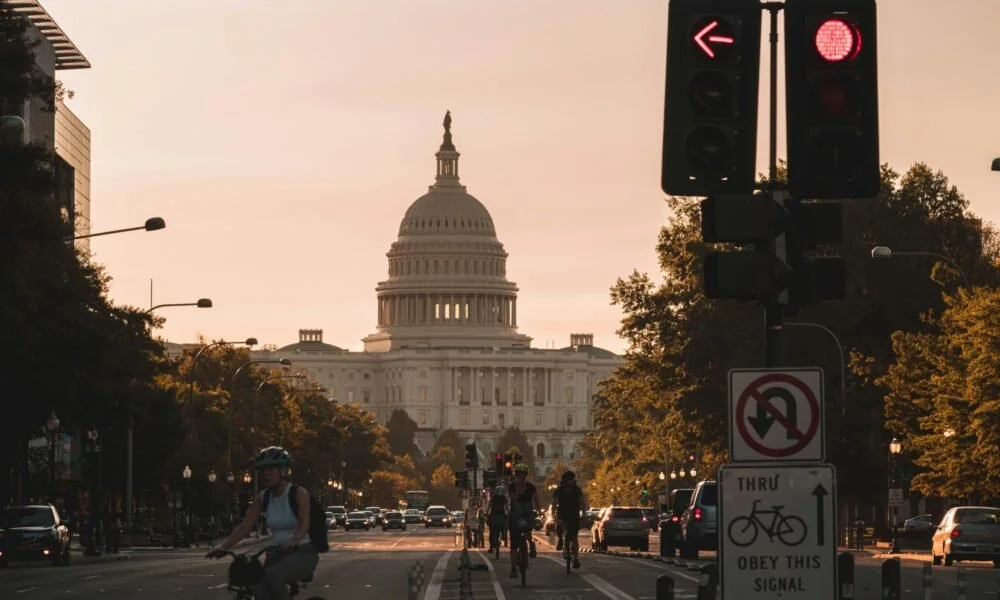
In other words, the DoT is proposing that we solve congestion and gridlock by adding more capacity (a tenet that has been proven over and over again to be ineffective) and even more troubling, by repurposing bicycle and pedestrian facilities to carry more automobile traffic.
This initiative underscores exactly why it is so important that we continue to organize together to advocate for the transportation system that works for all people, that keeps all users more safe, and that represents well thought-out, long-term investment in reducing gridlock.
The Union of Concerned Scientists recently published a blog post (with a fun BBP shout-out!) that lays out the political players, realities, and the stakes of the next surface transportation reauthorization (STR) bill coming through Congress. Essentially, a STR sets the course for billions of dollars of federal funding, for everything from bridges to bike paths, and comes up every 5 years.
This next STR will be critically important in ensuring that we continue to embrace science, and work towards a transportation system that is safer, more efficient and more fair for all users - and we need your voice to tell your congressman and governor that we prioritize bicycle and pedestrian facilities. Please reach out to your representatives, congressional delegates and our Governor and let them know that we will not accept an STR or traffic efforts that sacrifice safe bicycle and pedestrian facilities for more cars and congestion!
In signing off, we’d tell Sec. Duffy that we do have an area of agreement with his statement that “Our future does not have to be gridlocked.” We wholeheartedly agree, and will continue to organize and fight for a transportation system that gets us there - through safe, scientifically researched, equitable and environmentally friendly transportation policies instead of simply building more capacity for cars.
Devin McComas, Executive Director, BBP